Resources · Insights
Process Serving Myths, Debunked
The movies got it wrong. The internet got it wronger. Here's what's actually true about getting served in California.
Last updated: June 13, 2026
Why the myths persist
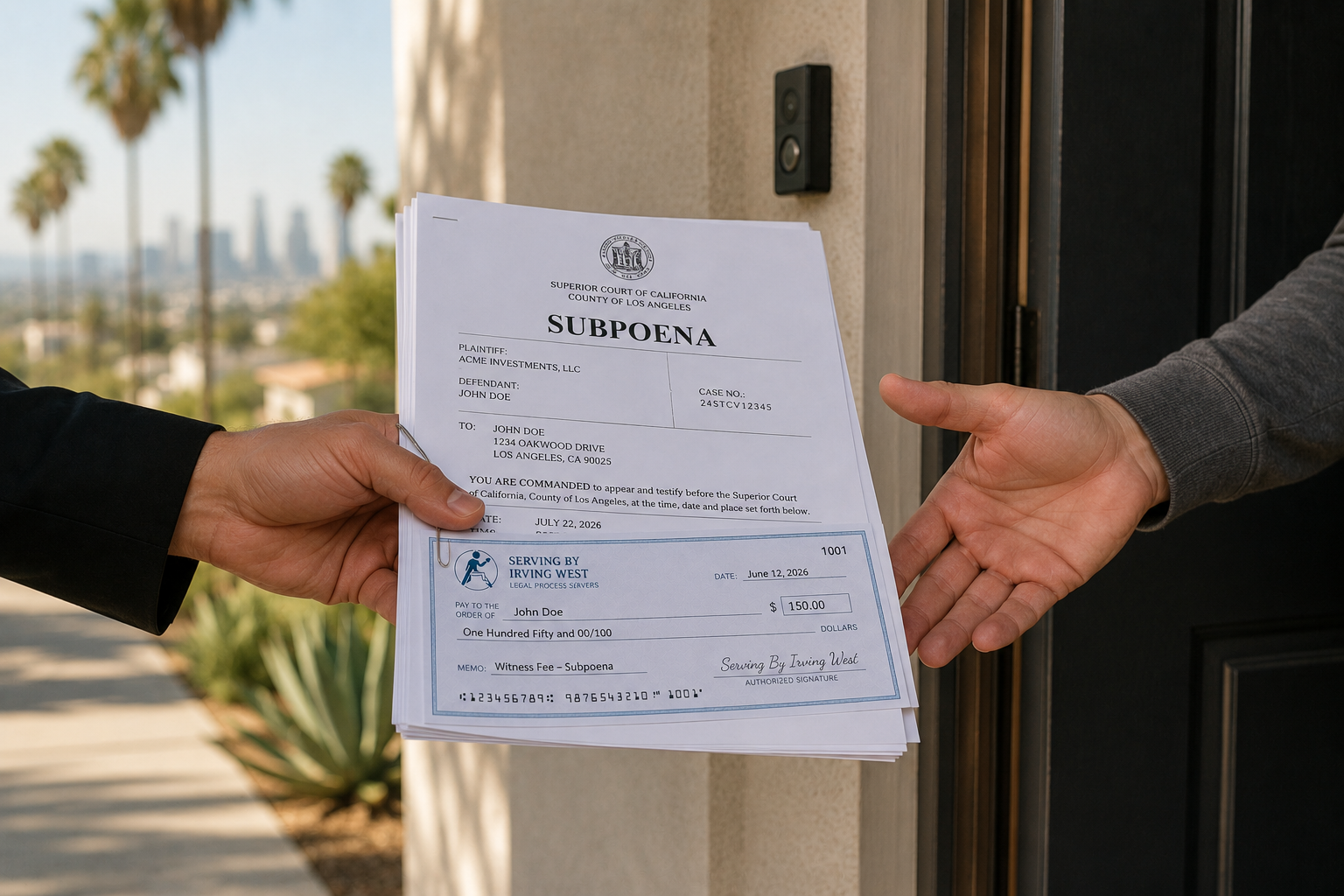
Process serving makes a great movie scene — the chase, the awkward handoff, the "you've been served!" smirk. None of it is how this actually works. The legal test for service is whether the defendant got notice in a manner authorized by statute. Most of the workarounds people believe in collapse on that single question.
Myth 1: "If I don't touch the papers, it doesn't count."
Reality: Once the server identifies the right person and the person refuses delivery, the server can set the documents down within reach (or at the person's feet) and announce the nature of the service. California courts treat that as valid personal service. The cute "I'm not accepting" line is, legally, accepting.
Myth 2: "Servers have to announce they're servers."
Reality: There's no requirement that a server announce themselves before handing over the papers. They do have to confirm the recipient's identity, and they cannot impersonate law enforcement or any government official (CA Penal Code § 538d and related statutes cover impersonation generally). Beyond that, a calm "Are you [name]? These are for you" is the whole script.
Myth 3: "You can't be served at work."
Reality: CCP § 415.20(b) actually contemplates substitute service at the defendant's "usual place of business." Personal service at work is fine. So is service at church, at a kid's soccer game, or in a coffee shop. Good servers avoid embarrassing locations out of professionalism, not because they have to.
Myth 4: "Sunday service is illegal."
Reality: California has no general prohibition on Sunday or holiday service for civil process. A handful of other states still have Sabbath rules; we don't. Sundays and holidays are often when people are home — which is exactly when servers want to catch them.
Myth 5: "Throwing the papers on the ground undoes service."
Reality: Service is complete the moment delivery and notice are given. What the recipient does with the paper after — recycle it, light it on fire, mail it back — has no effect on the court's analysis. The Proof of Service is the evidence that matters.
Myth 6: "Service through a closed door doesn't count."
Reality: If the server confirms the recipient is on the other side of the door (by voice, visual confirmation through a window, or the recipient's own statements) and leaves the documents at the threshold with an announcement, courts regularly uphold it. The "I'll just hide and not answer" tactic fails surprisingly often.
Myth 7: "They can't serve me if I'm in another state."
Reality: California's long-arm statute (CCP § 410.10) reaches as far as the Constitution allows. We routinely arrange out-of-state service through local servers. See our full guide on out-of-state and interstate service.
Myth 8: "If I duck for 30 days, I win by default."
Reality: If personal service fails after diligent attempts, the plaintiff can use substitute service, posting, or publication. A motivated plaintiff with a competent server will get notice on you eventually — and the longer you evade, the worse the optics. See how diligence requirements work.
If you're the one being served
Take the papers. Read them. Note the response deadline (it's printed on the summons). Call a lawyer. Do not call the server names — they're not the reason you're being sued, and being polite to them is the easiest part of your week.
FAQ
Myth: You can refuse to be served by not touching the papers.
Reality: If the server identifies the right person and the person refuses to accept, the server can drop the papers at their feet and announce service. California courts treat that as valid personal service — the law looks at notice, not whether the recipient consented to it.
Myth: A process server has to announce they're a process server.
Reality: There's no rule requiring a server to identify themselves as a server beforehand. They do have to confirm the recipient is the right person and clearly hand over the documents. Servers cannot pretend to be law enforcement, but they aren't required to wave a flag either.
Myth: You can't be served at work, at church, or in front of your kids.
Reality: California allows service anywhere the defendant can be lawfully approached. Servers usually avoid embarrassing locations because (a) it's bad form, and (b) it can complicate Proof of Service descriptions — but it's not illegal.
Myth: You can't be served on Sunday or a holiday.
Reality: There's no California rule prohibiting Sunday or holiday service for civil process. Some states still have Sabbath statutes; California doesn't. Sunday service is often productive because people are home.
Myth: If you tear up or throw away the papers, you weren't served.
Reality: Service is complete the moment the documents are delivered and notice is given. What happens to the paper afterward — confetti, recycling, kindling — is irrelevant. The court relies on the Proof of Service, not the condition of the document.
Myth: Service across a closed door doesn't count.
Reality: California courts have repeatedly upheld service where the person being served refuses to open the door but is identified through the door (voice recognition, visual confirmation through a window, etc.) and the papers are left at the threshold with announcement.
Need service handled right?