Resources · Litigation
Due Diligence: How Many Attempts Before Substitute Service?
If the diligence declaration is thin, the whole judgment can come down years later. Here's what California courts actually expect.
Last updated: June 13, 2026
What 'due diligence' actually means
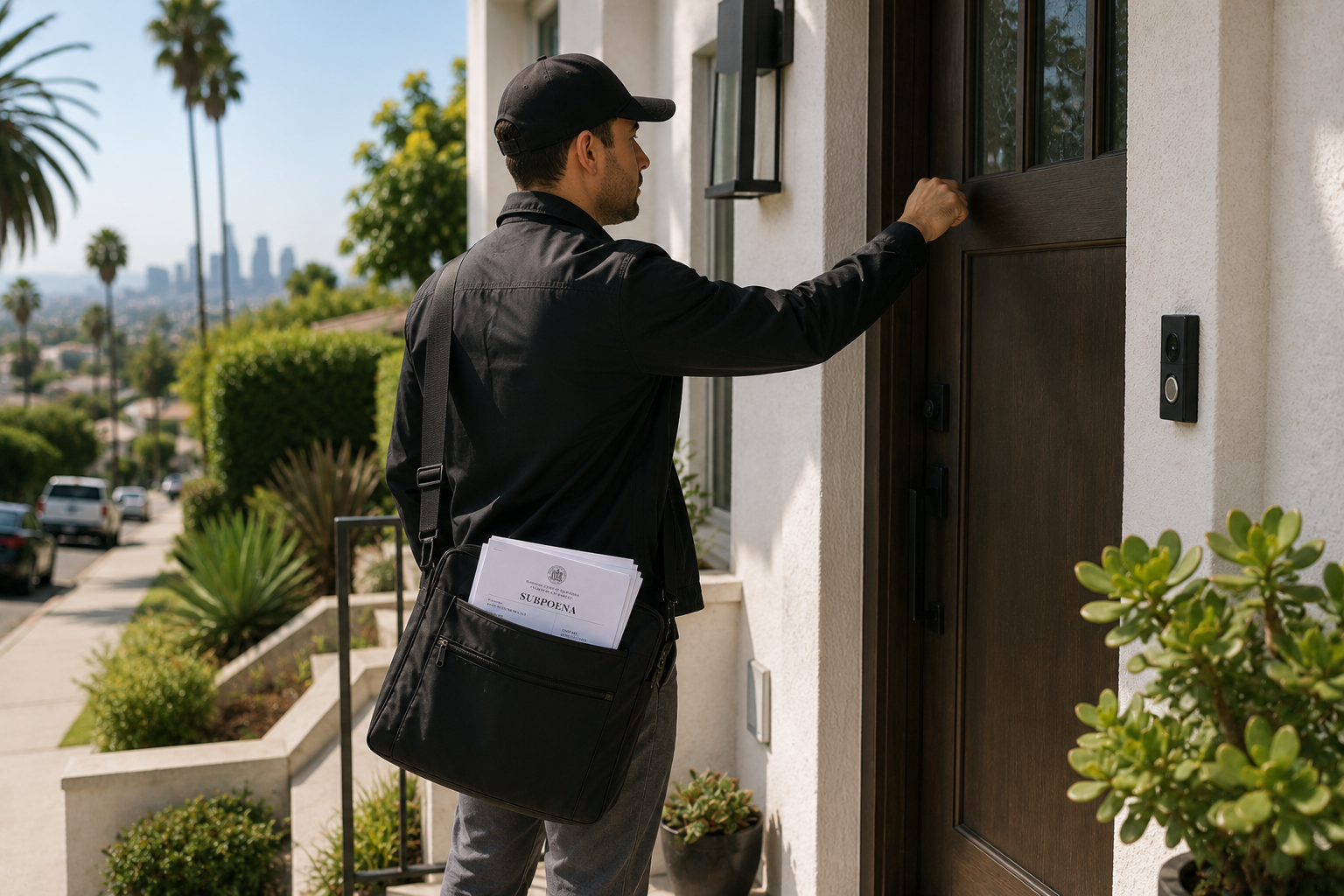
California Code of Civil Procedure § 415.20(b) lets you substitute serve an individual only after "reasonable diligence" trying to personally serve them. The statute doesn't define "reasonable diligence" with a number — it's a qualitative standard. Courts ask whether a thoughtful person, genuinely trying to find the defendant, would have done more.
That ambiguity is a feature, not a bug. A defendant who works nights deserves a server who tries at night. A college student deserves attempts that aren't all at noon on Tuesday. Courts want effort that matches the target.
The unofficial three-attempt rule
Most California trial courts accept three documented attempts at the defendant's home or usual place of business as the floor for substitute service, provided the attempts are at meaningfully different times and days. Two attempts is risky. One is a non-starter.
Some courts and judges expect more — particularly in Los Angeles Superior Court, where registered process servers commonly log four to six attempts before going to substitute service or asking for posting. When in doubt, do the extra attempt.
Vary the times. Seriously.
A declaration listing three attempts at 10:14 a.m., 11:02 a.m., and 9:47 a.m. invites a motion to quash. Mix it up:
- One early morning (before work)
- One mid-day
- One evening (after dinner)
- One weekend attempt — Saturday morning is gold
If the defendant is known to work nights or travel, adjust accordingly. The point is to show the court you tried to actually catch them, not just check boxes.
Documenting each attempt
The declaration of diligence (typically filed alongside Judicial Council form POS-010 or on the back of the Proof of Service) should capture, for every attempt:
- Exact date and time (down to the minute)
- Full address, including unit/apartment number
- Who answered, what they said, and any refusal to identify themselves
- Vehicles observed in the driveway or on the street (make, model, plate)
- Lights on, TV audible, dogs barking — any signs of occupancy
- Neighbor, leasing office, or building manager confirmations
- Mail piling up, packages on the porch, lawn condition
- GPS-stamped photos when permitted
When attempts aren't enough — posting and publication
If the defendant truly cannot be located, your next move is a noticed motion under CCP § 415.45 (service by posting) or § 415.50 (service by publication). Both require an affidavit of diligence showing that you exhausted reasonable means: skip traces, DMV/voter records (where permitted), social media checks, prior addresses, employer contact, and so on. Posting and publication are last resorts — judges scrutinize them carefully.
How this ties into the Proof of Service
A solid diligence record turns a Proof of Service from a vulnerability into a shield. For the broader context, see our overview of what process serving actually is.
FAQ
Is there a fixed number of attempts required for due diligence in California?
No. CCP § 415.20 doesn't set a magic number. Most California courts expect at least 3 good-faith attempts at different times of day and on different days of the week before approving substitute service, but the standard is qualitative — what a reasonable person would do to find the defendant.
What's the difference between substitute service and service by posting?
Substitute service (CCP § 415.20) leaves the papers with a competent adult at the home or usual place of business and mails a copy. Service by posting or publication (CCP §§ 415.45, 415.50) is a last-resort court-ordered method when the defendant truly cannot be located despite diligent search.
Do attempts have to be at different times of day?
Yes. A declaration showing three attempts all at 10 a.m. on weekdays is routinely rejected. Best practice is to vary by day (weekday vs. weekend) and by time (morning, evening, late evening) to show you genuinely tried to catch the defendant.
What should a process server document on each attempt?
Date, exact time, address, who answered (if anyone), what they said, vehicle observations, lights/noises inside the home, neighbor or building manager statements, and any GPS or photo timestamp. The declaration of diligence lives or dies on these specifics.
Does an incorrect or thin diligence declaration ever come back to bite the case?
Constantly. A weak declaration is one of the most common grounds for a motion to quash or to vacate a default judgment. Courts have set aside judgments years later when the diligence record didn't hold up.
Need service handled right?