Resources · Out-of-State
Serving Out-of-State Defendants Without the Headaches
The defendant moved. Or never lived here. Or has a New York office and a California lawsuit. Here's how interstate and long-arm service actually works.
Last updated: June 13, 2026
The governing rule: CCP § 413.10(b)
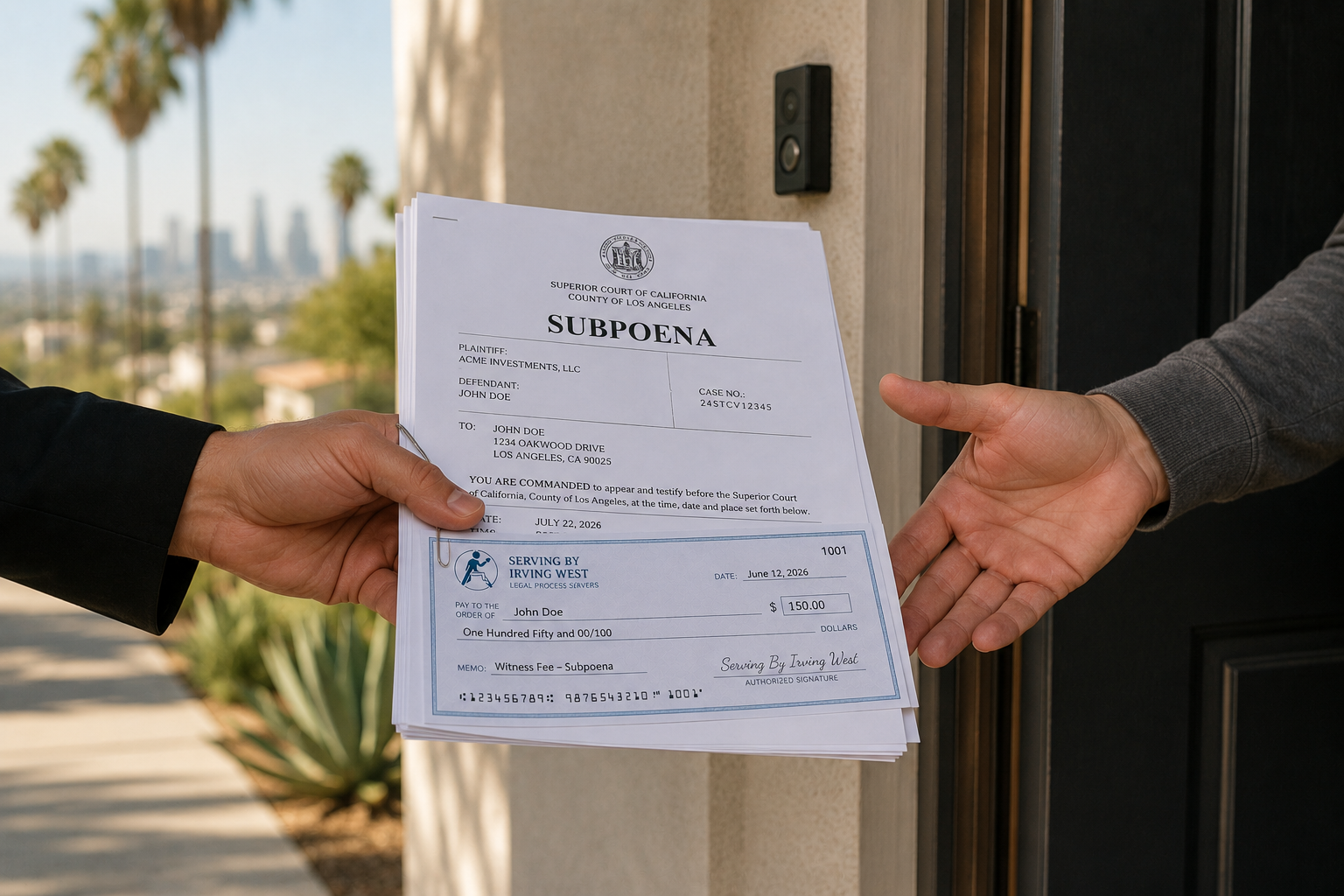
For a California case, when you need to serve someone in another U.S. state, CCP § 413.10(b) gives you two paths:
- Use any method authorized by California law (personal service, substitute service under § 415.20, mail with return receipt under § 415.40, etc.), or
- Use any method authorized by the law of the state where service is made.
Most servers default to the destination state's rules because if the service is ever challenged in California, courts respect a Proof of Service that complies with the local rules of the place where it happened.
Jurisdiction is a separate question
Don't confuse service with jurisdiction. CCP § 410.10 — California's long-arm statute — lets California courts exercise jurisdiction to the limits of the U.S. Constitution. Whether the defendant has sufficient minimum contacts with California is a substantive question for the court. Your job (and ours) is making service technically perfect; the jurisdictional fight is between the lawyers.
Practical methods, ranked
For most out-of-state defendants, in order of evidentiary strength:
- Personal service by a local registered/licensed process server. Best proof, fastest turnaround when the address is solid.
- Substitute service under the destination state's rules. Usually available after a documented diligence trail.
- Mail with return receipt (CCP § 415.40). Valid, but the proof is thinner. Use as a primary method only when speed and cost dominate.
- Service by publication. Last resort. Court order required.
Timelines you can actually plan around
With a good address and a local server, most out-of-state personal service completes in two to seven business days. Add time when:
- The address is a P.O. box, mailbox store, or virtual office
- The defendant has moved and a skip trace is needed
- The destination state requires county registration of the server (e.g. NY, IL, NV)
- The defendant is evading — substitute service usually needs three or more attempts
Why a real network beats a cold call
Serving by Irving West reaches coast to coast through our long-standing relationship with the original Serving By Irving in New York (the firm has been at this since 1977). Read more about how that partnership came together — or our companion piece on what "New York hustle, California expertise" actually means for your case. The short version: warm handoffs, vetted local servers, and a single point of accountability are why a national network out-performs hiring a stranger in a city you don't know.
International service (briefly)
Service in a country that's signed the Hague Service Convention follows the Convention's Central Authority process — typically three to six months, sometimes longer. Non-Hague countries vary wildly. If you've got an international defendant, build calendar time in from day one and talk to your server before filing.
FAQ
Which state's rules govern out-of-state service from a California case?
California Code of Civil Procedure § 413.10(b) says service outside California, but within the U.S., can be made in any manner prescribed by California law or by the law of the place where the service is made. Most servers default to the destination state's rules because that's where the proof has to hold up if challenged.
Does California's long-arm statute let me sue anyone, anywhere?
CCP § 410.10 reaches as far as the U.S. Constitution allows — minimum contacts with California. Personal jurisdiction is a separate analysis from service. You can perfectly serve a defendant who can still get the case dismissed for lack of jurisdiction.
How long does out-of-state service usually take?
Two to seven business days from the time the local server has the documents, depending on the state, address difficulty, and how many attempts are needed. International service via the Hague Convention is measured in months.
Can I just mail the papers to an out-of-state defendant?
CCP § 415.40 allows service on a person outside California by first-class mail with a return receipt requested. It's valid when properly executed, but many lawyers prefer personal service for evidentiary strength — a return receipt with a scribbled signature is easier to attack than a sworn affidavit.
Why does using a national network matter?
A local server in the destination city knows the courts, the registration requirements, the realistic timeframes, and the neighborhoods. Speed and Proof-of-Service quality both improve when the boots on the ground actually live where the defendant does.
Need service handled right?