Resources · Basics
What Is Process Serving?
Before a court can decide anything against you, the law says you have to know about it. Process serving is the formal way the legal system gives that notice — and proves it.
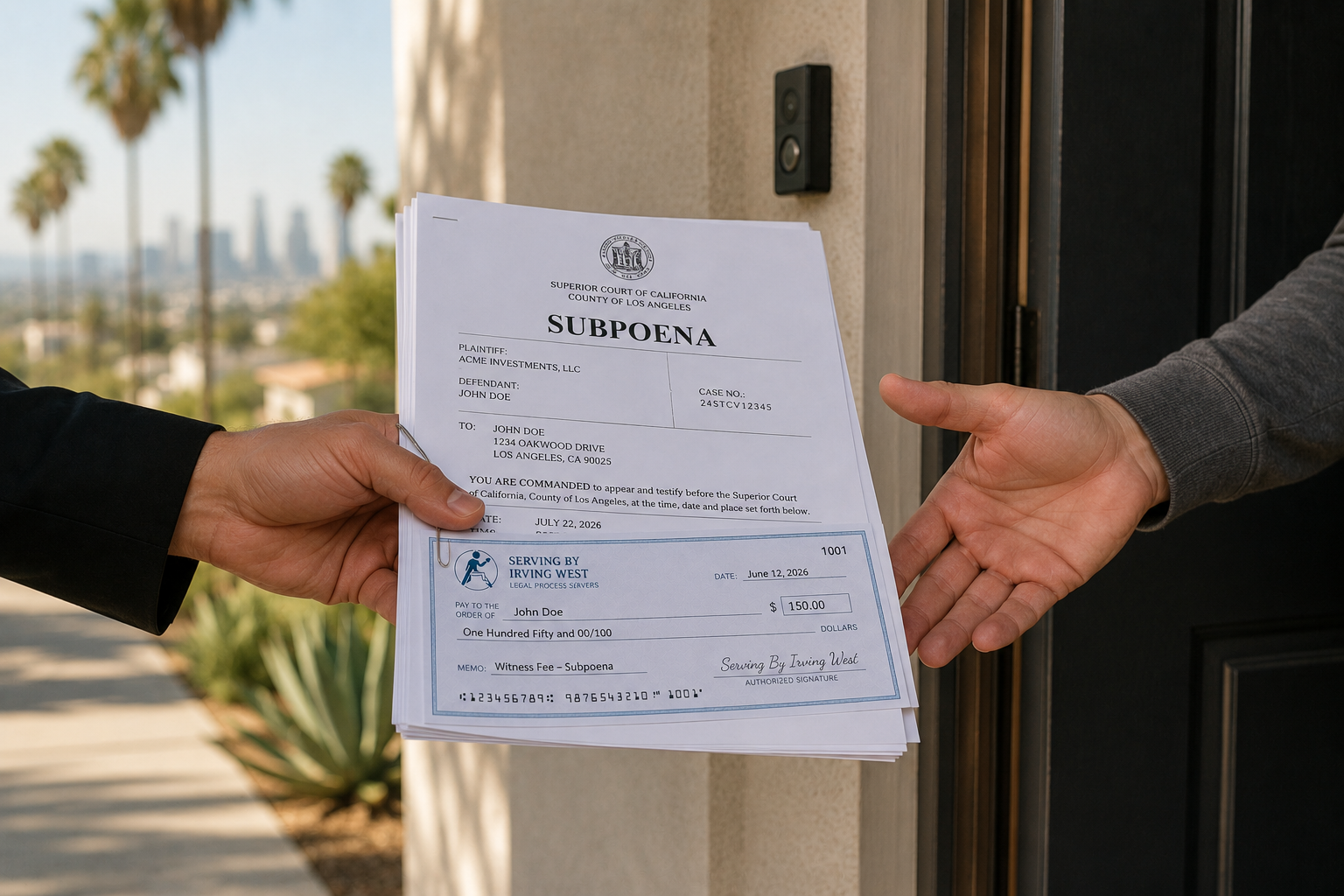
"Service of process" is the legal phrase for delivering court documents to someone in a way the law recognizes as valid. The documents — collectively called process — give the recipient official notice that they're a party to a case, or that a court is commanding them to do something.
The constitutional right to due process under the Fifth and Fourteenth Amendments requires this notice. Without it, any judgment a court enters can later be attacked and set aside.
What gets served
The papers a process server handles
- Summons and Complaint — opens a civil lawsuit.
- Subpoenas — commands to appear, testify, or produce records (see our witness-fee guide).
- Eviction (Unlawful Detainer) papers — 3-day, 30-day, 60-day, and 90-day notices, plus the summons that follows.
- Family law petitions — divorce, custody, restraining orders.
- Small claims — plaintiff's claim and notice of hearing.
- Writs, levies, and post-judgment orders.
Who can serve
Who's allowed to serve papers
California is permissive about who can serve — but strict about who can do it for money. Under CCP § 414.10, anyone who meets these conditions can serve:
- At least 18 years old, and
- Not a party to the action.
Anyone who serves more than 10 papers per year for compensation must register with the county clerk as a process server, post a $2,000 surety bond, and complete Live Scan fingerprinting. (See our how-to-become guide.)
The sheriff or marshal can also serve, and is required for certain writs and post-judgment enforcement.
How it's done
The methods of service
1. Personal service
The cleanest, most defensible method. The server physically hands the documents to the person being served. The recipient does not have to accept or sign anything — the server only needs to identify the right person and present the papers.
2. Substituted service
When personal service has been attempted with reasonable diligence and failed, the server may leave papers with a competent adult at the recipient's home, workplace, or usual mailing address — and then mail a copy. A Declaration of Diligence describing the failed attempts is filed with the Proof of Service.
3. Notice and acknowledgment of receipt (mail)
A copy of the summons and complaint is mailed along with a notice and acknowledgment form. Service is complete on the date the recipient signs and returns the acknowledgment. If they don't, the plaintiff can recover the cost of personal service.
4. Service by publication or posting
A last-resort method that requires a court order. Used when the defendant cannot be located despite diligent search. Notice is published in a newspaper of general circulation in the area where the defendant is most likely to be found.
The receipt
Proof of Service: the document that closes the loop
After serving, the process server prepares and signs a Proof of Service under penalty of perjury, describing the who, what, where, when, and how. The attorney files it with the court. Until that document is on file, the court generally can't take action against the party served. A sloppy or inaccurate Proof of Service is one of the most common reasons service gets quashed and a case restarts months later.